Lets go on a little adventure back in time to the Mediterranean to learn about Corinthian Purple, a color that Aunt Mimi calls “Cheshire” Purple!
Corinthian Purple, also known as Tyrian purple, originated in the 16th BCE in the city of Tyre in what the Greeks called “Phoenicia” which is modern-day Lebanon. Phoenicia was believed to have meant “the land of purple.”
The source of Tyrian Purple Dye was a predatory Murex snail, of which thousands had to be harvested to make but a gram of dye. The glands, which excrete a yellow fluid, then had to be removed from the snails, heated slowly over a period of ten days, at which time the mixture of glands turned a reddish purple color after being exposed to light. It was an extremely unpleasant smelling process, which caused dye facilities to be downwind of cities and towns.
Tyrian Purple Dye typically cost more than an average person made in year, a gram being recorded as costing more than twice a roman soldier’s salary, or more than that of a diamond engagement ring. As such, only the wealthy and royalty wore Tyrian Purple clothing, such as Julius Caesar, among others. In the Byzantine Empire, royalty would even sign documents with purple ink to signify their wealth.
The saying “born in the purple” meant to “denote one of noble birth” in the Byzantine Empire, though the phrase and color fell out of style until modern inventor William Henry Perkin invented the world’s first commercial synthetic dye in 1856, calling it aniline purple. Today, we call it mauve.
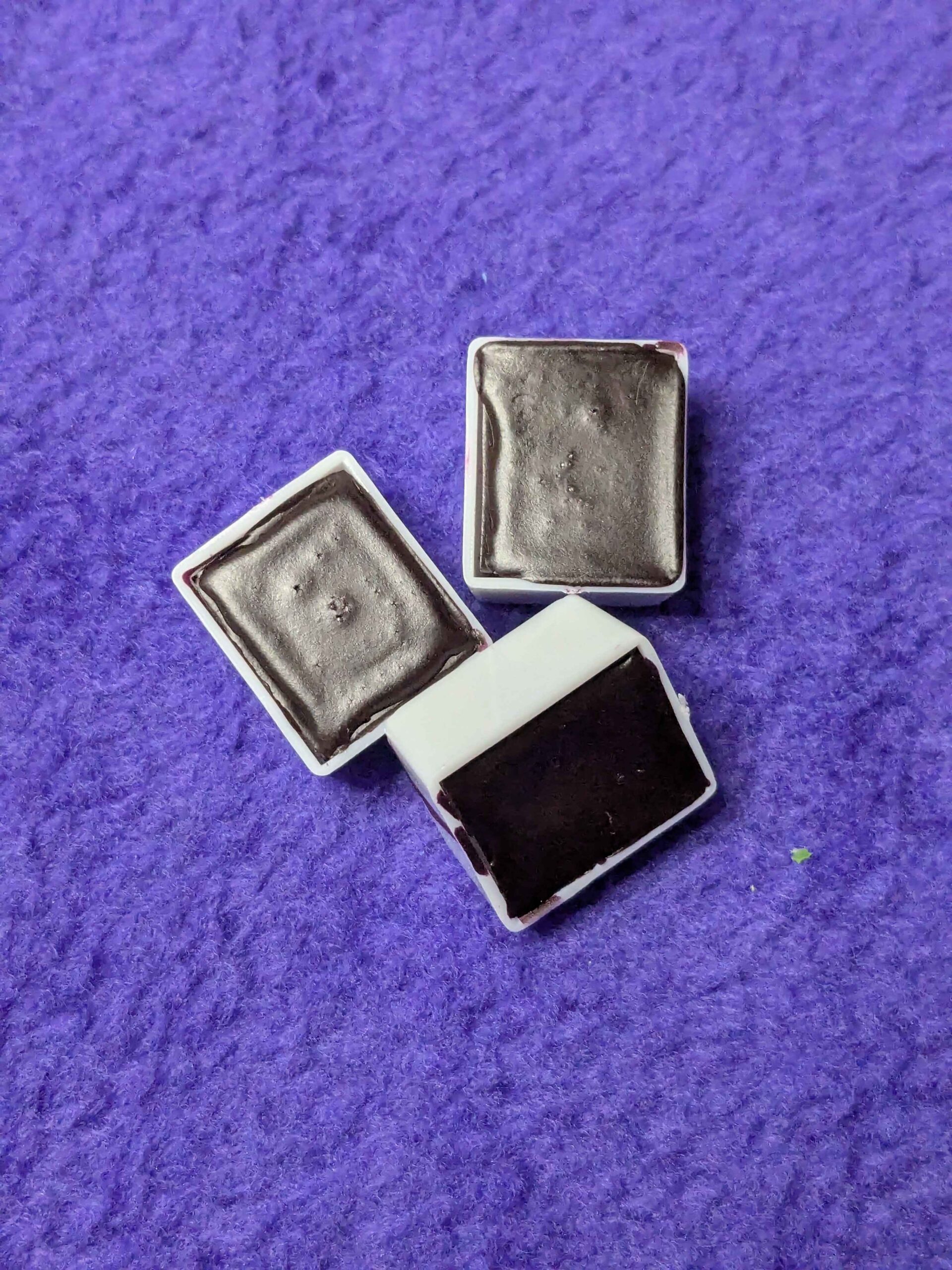
Aunt Mimi’s current Corinthian or “Cheshire” Purple is produced in Verona, Italy. It is a composite color, meaning it is comprised of a mineral, usually magnesium or calcium. Using heat, the color which starts out as a dye or an oxide is bonded to the mineral, producing a very small amount of residual water. In this environmentally friendly endeavor, synthetic earth pigments are made that are UV resistant and Archival quality, making for a beautiful and long lasting color.