Welcome to Aunt Mimi’s and get ready to take this wonderful journey with me!
Establishing a small business is a lot of small steps, but when you throw learning a new craft into the mix, it gets so much more fun! Are you ready to learn how I got started? Lets go!
In January of 2024 I started the process of learning how to make paint by hand with a muller, which is an artisanal tool that dates back as long as humans have been making paint. Sometimes, new hobbies and crafts take a while to learn how to do, and sometimes you have to learn what all you need ahead of time because you can’t find your materials locally.
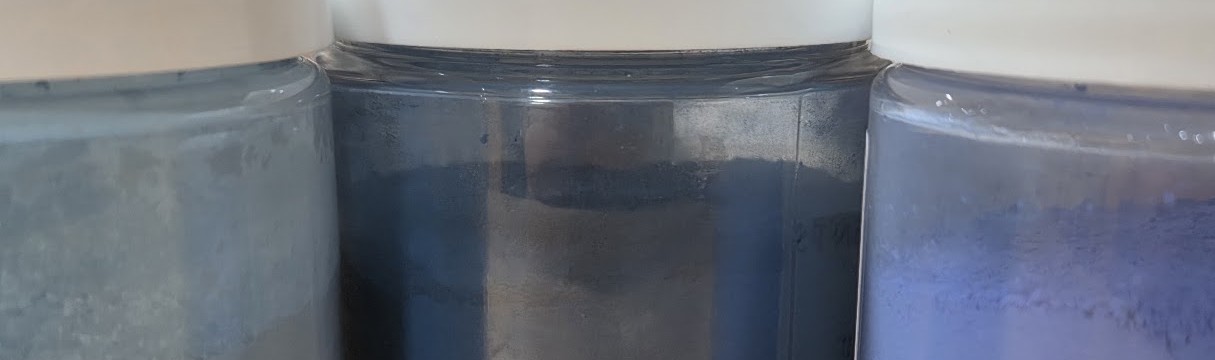
For paint, all of my pigments are sourced outside of the US, meaning I have to order from suppliers who import their pigments from other countries such as France, Italy, Germany, or elsewhere. I chose the Earth Pigments brand, found at https://www.earthpigments.com because most of their pigments are all natural mineral based pigments made from minerals found in the earth. While it’s not safe to breathe the pigments in, once they’re turned into paint they are non-toxic and safe to touch, handle, and use for their intended purpose: watercolor painting.
Outside of pigments, making paint requires a binder, or a glue that holds the pigment together. For watercolors, binder is made from gum arabic, which is a hard sap farmed from certain types of acacia trees, distilled water, glycerin, and clove oil. Gum Arabic is imported much like pigments are, though glycerin and clove oil can be found locally in any superstore.
Why do we use these materials when making paint?
Gum Arabic has been used in inks and cosmetics as far back as Ancient Egyption times. This tree sap is farmed from Acacia Senso Lato and Senegalia Senegal, two types of Acacia trees, mostly in Sudan. Sudan supplies about 70% of the world’s acacia gum. The tree sap acts as a glue, holding all the other ingredients together.
Glycerin is used as a rewetting agent, meaning it helps the paint soften when you add water. It wouldn’t be watercolor paint without softening when water is added! Instead of Glycerin, some artisans use honey as a re-wetting agent. While this method works for some, here at Aunt Mimi’s we find that adding honey is a sticky endeavor that increases the odds of your paint molding.
Clove Oil is simply used as an anti-mold and mildew agent, keeping your paint from growing unwanted friends while you store it.
We use Distilled water because it has less of a chance of molding or mildewing, as well, making your paints much more pristine to look at and use. It also dissolves the gum arabic, making the binder nice and smooth.
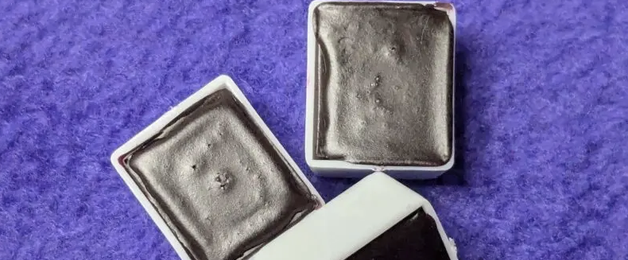
Once we obtain all of our materials, it’s time to make paint! Making paint is very much a learn as you go process, meaning I have made mistakes and have a dud product that isn’t quite perfected enough to sell. That’s okay, though, because when you’re learning, there is no such thing as failure!
Think about your own artistic endeavors. Where did you start? Where did you want to go? Have you reached your goals yet? For me, I’m constantly setting new goals to achieve, which helps me move farther and farther ahead in my craft, giving me opportunities to learn and grow as both an artisan and a person.
I can’t wait for you to join me on this journey,
Onward!
~Aunt Mimi